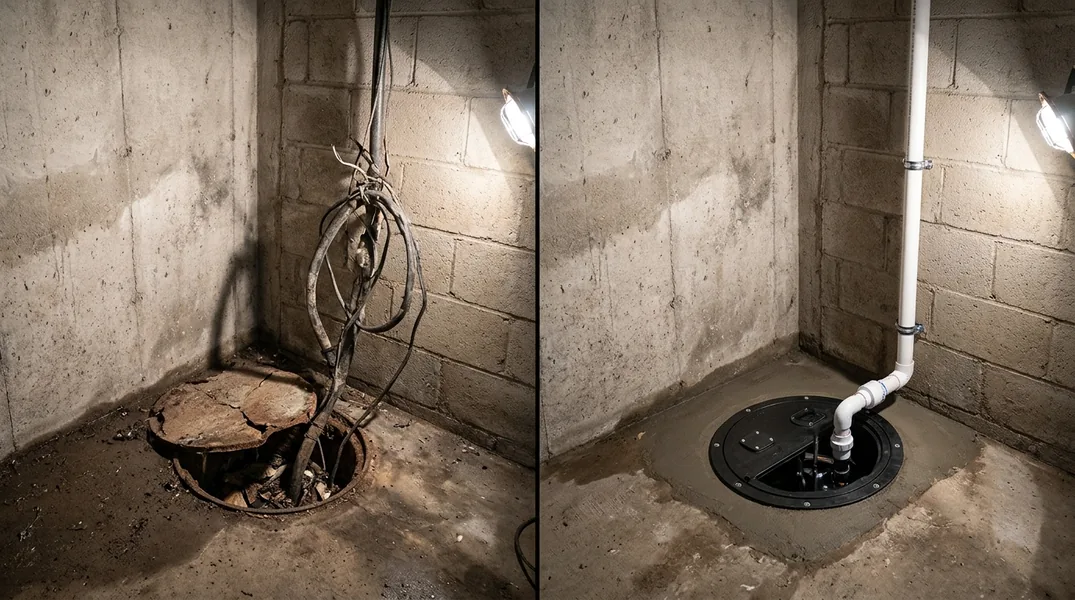
Why the Spring Thaw Is the Toughest Test for Your Sump Pump
In Southeast Minnesota, spring does not arrive gently. The ground is still frozen solid when the snowpack starts melting, which means all that water cannot soak down into the soil. Instead, it runs along the surface, pools against foundations, and finds its way into the drain tile around your home. Add a few inches of rain on top of that meltwater and you have the classic recipe for a flooded basement in Rochester.
Your sump pump is the last line of defense during this window. It sits in the lowest part of your basement, collects water from the perimeter drainage system, and pushes it safely away from the house. But here is the catch: most sump pumps sit idle for months during the winter. When they are finally called into action, they need to work perfectly on the first try. A pump that has seized up, a float that is stuck, or a check valve that has failed will not give you a warning before the water starts rising. That is why a little maintenance in late winter pays off enormously when the thaw hits.
Sump Pump Maintenance Checklist for Southeast Minnesota Homeowners
The good news is that most sump pump maintenance is simple enough for any homeowner to handle in an afternoon. Start by unplugging the pump and removing the lid from the pit. Look inside for debris, silt, or gravel that may have collected over the winter, and clean it out so the float can move freely. Then plug the pump back in and slowly pour a bucket of water into the pit to trigger the float. The pump should kick on, drain the water quickly, and shut off cleanly. If it hesitates, runs loudly, or does not shut off, those are signs it needs attention before the spring rush.
Next, check the discharge line and the Basement Waterproofing system it connects to. Make sure the pipe is not frozen, kinked, or blocked by leaves and ice. The discharge should send water several feet away from the foundation and slope away from the house, not dump it right back against the wall. If your home relies on an Interior Drain Tile System, this is also a good time to confirm that the pit is receiving water from the tile and that nothing is clogged. A quick test now can save you a wet basement later.
Don't Overlook the Sump Pump Check Valve
The Foundation Waterproofing system in your home depends on one small but critical component: the sump pump check valve. This valve sits on the discharge pipe and allows water to flow out of the pit but prevents it from flowing back in. Without a working check valve, every time the pump shuts off, the water sitting in the discharge line drains right back into the pit. The pump then cycles on again, over and over, which shortens its life and can leave you with a burned-out motor right when you need it most.
During your maintenance check, inspect the check valve for cracks, mineral buildup, or a stuck flapper. If it is more than a few years old or you cannot remember the last time it was replaced, swap it out. It is an inexpensive part and one of the easiest upgrades you can make. While you are at it, confirm that the valve is installed in the correct orientation, with the arrow pointing away from the pit. A properly functioning check valve keeps your pump from short-cycling and gives you peace of mind when the spring storms roll through.
Battery Backup Sump Pump: Your Safety Net During Storm Basement Flooding
Spring in Southeast Minnesota brings more than snowmelt. It brings thunderstorms, and those storms can knock out power for hours. A standard sump pump is useless without electricity, which is exactly when storm basement flooding is most likely. That is why a battery backup sump pump is one of the smartest investments a homeowner can make. The backup runs on a charged battery and kicks in automatically if the primary pump fails or the power goes out. It will not run forever, but it can keep your basement dry through the worst of a storm until power returns.
If you already have a backup system, test it now. Most units have a test button or a float you can lift manually. Check the battery terminals for corrosion, top off the water if it is a wet-cell battery, and confirm the charger is working. Batteries typically last three to five years, so if yours is older, plan to replace it before the thaw. If you do not have a backup yet, this is the season to add one. A local professional can help you choose the right size and install it correctly, and you can request a free estimate to get started.
Sump Pump Maintenance Near Me: When to Call a Pro in Rochester
Many maintenance tasks are DIY-friendly, but some situations call for an expert. If your pump is more than seven to ten years old, runs constantly, makes grinding noises, or has failed to keep up during past storms, it is time for a professional evaluation. The same goes for homes in Byron, Stewartville, and Oronoco that have never had a backup system or whose discharge lines are undersized. A trained eye can spot problems you might miss, like a pit that is too small, a check valve installed backward, or a discharge line that will freeze solid in a late cold snap.
Rochester Waterproofing helps homeowners across the region get their sump systems ready for the spring thaw. Whether you need a routine inspection, a new check valve, a battery backup installation, or a full review of your Exterior Basement Waterproofing and drainage setup, the team can walk you through your options and pricing before any work begins. Call (507) 516-5528 to schedule a visit, or reach out online to set up a free estimate. A little preparation now is far easier than bailing out a flooded basement when the meltwater arrives.
Looking for a professional basement waterproofing contractor in Rochester? Rochester Waterproofing responds fast for all your basement waterproofing needs.
Get a Free QuoteOur services: Basement Waterproofing · Interior Drain Tile System · Exterior Basement Waterproofing