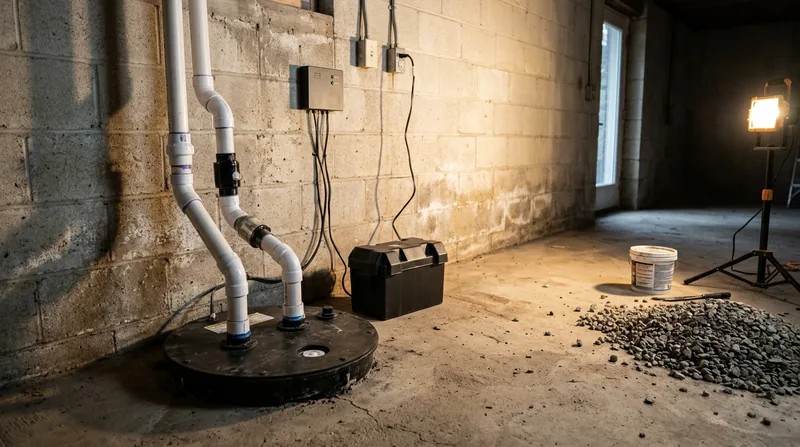




Rochester sits on glacial till over fractured Galena limestone, and that geology decides how water behaves under your house. In Lowertown and the older east-side streets, full basements built with stone or early block walls sit in clay-rich soil that holds snowmelt for weeks. In Elton Hills, Pill Hill and Bamber Valley, 1950s to 1970s ranches and split-levels have sump basins that run hard every spring thaw. When a storm takes the power out, the pump stops and the basin fills. Battery Backup Sump Pumps in Rochester keep the pump running on a charged battery so the water keeps moving out even when the grid is dark. We size the battery to your pit, wire the float and alarm, and test the whole setup before we leave. If your primary pump is aging, pair this with sump pump installation and replacement so the backup has a reliable primary to support.
Why Battery Backup Sump Pumps Matter in Rochester's Spring Thaw and Storm Season
Rochester's worst water arrives in two waves: the March and April thaw, when saturated glacial clay dumps meltwater into footing drains, and the heavy summer thunderstorms that push the Zumbro River and Cascade Creek over their banks. Both events knock out power at the moment the sump pump is cycling every few minutes. A backup battery buys you hours of pumping when the lights are out, and that is the difference between a damp floor and a finished basement full of water.
- Spring snowmelt saturates the clay till and keeps the water table high for weeks, so the pump runs constantly.
- Summer storms take out power lines across Northwest Rochester and the southeast subdivisions at the worst possible time.
- Freeze-thaw cycles open cracks in block and stone walls, letting more water reach the basin.
- Older Lowertown basements often have undersized pits that fill fast once the primary pump stops.
If your basin already fills during a normal rain, a battery backup is not optional, it is the safety net that keeps the water moving.
Key info: A homeowner in Elton Hills lost power for nine hours during a July storm and the primary pump stopped with the basin half full. The backup battery kept the pump cycling and the finished side of the basement stayed dry. That is the scenario we size for.
For official guidance on electrical and plumbing work in Minnesota, check the Minnesota Department of Labor and Industry before you schedule any sump discharge changes.
How We Install a Battery Backup Sump Pump in a Rochester Basement
We start by looking at your existing pit, pump and discharge line, not by selling you a box. In a 1950s Bamber Valley ranch, the pit may be shallow and the check valve may be old; in a 2015 Northwest Rochester build, the pit is deeper and the primary pump is newer. Either way, we match the battery capacity to how often your pump actually cycles during a storm, then wire the float, alarm and charger so the system is ready before the next outage.
- We inspect the sump basin, primary pump, check valve and discharge line to confirm the setup can support a backup.
- We measure the pit depth and pump draw, then select a battery and charger sized to your actual cycling rate.
- We mount the backup pump and float switch so the backup only runs when the primary fails or the power drops.
- We wire the charger and alarm, then run a live test with the primary pump disabled to confirm the backup moves water.
- We label the system and walk you through the monthly test and the battery replacement interval.
Every install ends with a real test, not a handshake. If the backup cannot keep up with your inflow, we tell you and recommend a larger basin or a second pump instead.
Key info: In a 1920s stone-foundation house near Lowertown, the existing pit was too small for a backup pump and a primary pump side by side. We set a wider basin and a new check valve, then installed the battery backup. The homeowner in Stewartville with the same setup got a drop-in unit because the pit was already sized right.
If your basement also takes water through the walls, the backup pump only solves half the problem. Pair it with an interior drain tile system so water reaches the basin instead of pooling at the wall base.
Battery Backup Sump Pump Options We Install in Rochester
Not every basement needs the same backup. A gravity-fed backup works where the discharge line can drain by slope; a battery and charger system works where the pump has to push water up and out. We stock and install the common configurations, and we tell you which one fits your pit instead of defaulting to the most expensive option.
| Approach | Description | Best for |
|---|---|---|
| Battery and charger backup pump | A dedicated 12V backup pump with a charged battery and automatic float, wired to run only when the primary fails. | Most Rochester basements with a standard pit and a working primary pump. |
| Combination primary and backup unit | One housing with a primary AC pump and a DC backup pump sharing the same discharge line. | Older pits where space is tight and the existing pump is due for replacement. |
| High-capacity battery bank | Larger battery capacity for pits that cycle every few minutes during spring thaw. | Lowertown and east-side basements with high inflow and long outages. |
| Alarm and monitoring add-on | Water-level and power-loss alarm that sounds before the basin overflows. | Finished basements and homeowners who travel during storm season. |
We size the battery to your inflow, not to a generic chart. A pump that cycles every ten minutes in a Northwest Rochester subdivision needs less battery than one that runs every two minutes in a Lowertown stone basement.
Battery Backup Sump Pumps Cost in Rochester: What to Expect
Most battery backup installations in Rochester start around $900, and that figure covers a standard pump, battery, charger, float and a live test. The number moves up when the pit needs to be widened, when the existing check valve and discharge line are undersized, or when you choose a high-capacity battery bank for a basement that floods fast. A combination primary and backup unit costs more than a backup alone because you are replacing the primary pump at the same time.
Getting two or three estimates is smart because the right answer depends on your pit, not on a catalog. One contractor may quote a drop-in unit for a 1990s Northwest Rochester pit, while another may recommend a wider basin for a 1920s Lowertown basement. We give you a written scope that says what is included and what is not, so you can compare quotes on the same basis. For a broader look at how we price work across the region, see our full pricing overview.
If the estimate reveals a failing primary pump or a shallow basin, we tell you before we install anything. The backup is only as good as the pit it sits in.
Battery Backup Sump Pumps Near Me: How to Hire a Rochester Contractor
When you search for battery backup sump pumps near me in Rochester, the list of names can look the same. The differences show up in the details: whether the contractor is licensed and insured, whether they test the system after install, and whether they explain the permit rules for any work that changes your sump discharge. A backup pump install usually does not require a permit, but altering the discharge line or the sanitary connection can, and the rules vary by jurisdiction. Ask the contractor to confirm with the local building department before work starts.
Get at least two estimates and ask each one what happens if the battery fails in the first year. Check references from basements like yours, whether that is a stone foundation in Lowertown or a poured concrete walkout on the southeast edge. If you are in a subdivision with an HOA, confirm whether exterior discharge changes need approval before the work begins. To schedule a free basement inspection and a written estimate, contact us here.
A backup pump is a simple piece of equipment, but the install and the sizing decide whether it works when the power is out. Hire the contractor who tests it in front of you.
Battery Backup Sump Pumps in Rochester: Pricing Guide
| Service | Price | Details |
|---|---|---|
| Battery backup pump install (standard pit) | Starting at $900 | Includes 12V backup pump, battery, charger, float, check valve and live test in a standard pit |
| Combination primary and backup unit | Starting at $1,350 | Replaces the primary pump and adds backup in one housing, best when the existing pump is aging |
| High-capacity battery bank upgrade | Starting at $1,600 | Larger battery capacity for pits that cycle every few minutes during spring thaw |
| Pit widening or basin replacement | On estimate | Needed when the existing basin is too small for a backup pump, common in pre-1950 basements |
| Travel | Included | In Rochester and surrounding areas, no separate call-out or mileage fee |
| Estimate | Free | Response within 24h at (507) 516-5528, no obligation to book |
Indicative pricing, the exact cost depends on square footage, finish, and site access. Free personalized estimate within 24h at (507) 516-5528.


