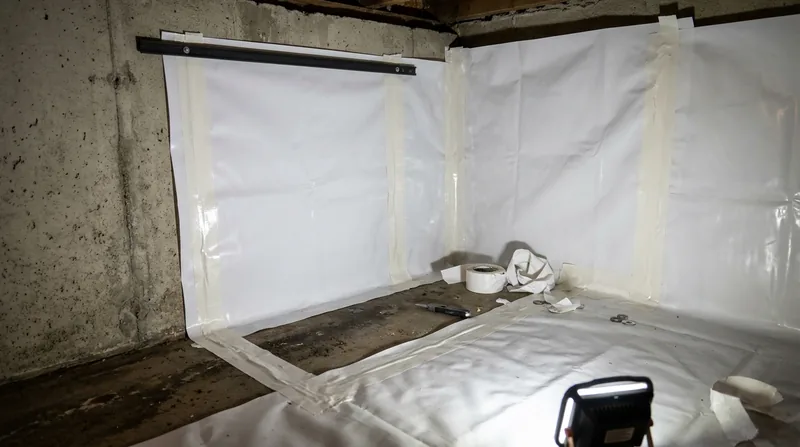




Vapor Barrier Installation in Rochester
Vapor Barrier Installation in Rochester is the work that stops ground moisture from the glacial till from pushing its way through your basement walls and slab, and it is the step most homeowners skip until the musty smell and the damp concrete force the issue. This city sits on clay-rich till over cracked Galena limestone, so groundwater finds every joint and seam it can. In the 1900s to 1940s brick and frame houses of Lowertown and the older east-side streets, that moisture migrates through stone and early block walls. In the 1950s to 1970s ranches of Elton Hills and Bamber Valley, it shows up as damp slab edges and peeling floor paint. In the newer poured-wall subdivisions of Northwest Rochester, it comes through cold joints and tie holes. We install heavy-duty barrier sheets across walls and slab, seal the seams, and tie the system to the drainage so the lower level stays dry. If you want the full picture of how this fits with drainage and sealing, start with our basement waterproofing service.
Why Vapor Barrier Installation Matters in Rochester's Glacial Till and Karst Bedrock
Rochester's ground holds water. The clay-rich till traps snowmelt and summer storm runoff, and the fractured Galena limestone below lets it travel through joints, springs, and sinkholes. Spring thaw and heavy storms feed the Zumbro River and Cascade Creek, and low yards pool. That moisture moves through concrete and block as vapor, not just liquid, and it condenses on cool basement surfaces. A proper barrier stops that vapor at the wall and slab face.
- Efflorescence on block and stone walls tells you moisture is moving through the masonry and depositing salts on the surface.
- A musty basement smell that returns after every rain usually points to vapor coming through the slab and wall, not a single leak.
- Damp, cold floors in partly finished 1950s and 1960s basements are a classic sign that slab vapor is the problem.
- Peeling paint and lifting tile at the base of poured walls in newer subdivisions often trace to moisture vapor, not a visible crack.
When those signs show up, the fix is a sealed barrier system tied to drainage, not another coat of paint on the wall.
Key info: In a 1920s east-side Rochester house with a stone foundation, we often find damp walls and a wet slab edge even when no crack is visible. That is vapor moving through the masonry from the saturated till behind it, and it is exactly the condition a sealed vapor barrier is built to control.
For the official word on permits and inspection requirements that can apply when drainage or discharge is altered, check the City of Rochester building department before work begins.
How We Install Vapor Barriers in Rochester Basements
We start by finding where the moisture is coming from. A wet slab edge in a Bamber Valley ranch is a different problem from a damp stone wall in Lowertown, and the barrier layout changes with it. We check the drain tile and sump before we cover anything, because a barrier over a dead drain just hides the problem. Then we fit, seal, and terminate the sheets so water has a path to the sump, not to the floor.
- We inspect the basement, the wall base, the slab, and the existing drain tile and sump to confirm where vapor and liquid water are entering.
- We correct grading and downspout issues outside where they feed the problem, so the barrier is not fighting a river of roof water.
- We clean and prep the wall and slab surfaces, removing loose parging and efflorescence so the barrier sits flat and the sealant bonds.
- We install heavy-duty barrier sheets across the walls and slab, overlapping and sealing every seam and termination with the correct tape and adhesive.
- We tie the barrier into the sump basin and discharge path where needed, so any water that reaches the system drains instead of sitting behind the plastic.
- We test the sump and check valve, then walk the basement with you and explain what to watch for after the next big rain.
If your drain tile is failing or the sump is undersized, the barrier alone will not solve it, and we tell you that up front. Our interior drain tile system page covers the drainage side of the job.
Key info: A 1960s split-level in Elton Hills had damp slab edges and a musty smell every spring. The drain tile was partly clogged, so we cleared and repaired it, tied in a new sump, then installed a sealed wall and slab barrier. The basement stayed dry through the next thaw.
Vapor Barrier Approaches We Use in Rochester
Not every basement needs the same barrier. A stone foundation in an older east-side house, a poured-wall ranch, and a newer walkout in the southeast subdivisions each call for a different layout and termination detail. The table below shows the main approaches we install and where each one fits.
| Approach | Description | Best for |
|---|---|---|
| Wall and slab vapor barrier | Heavy-duty sheets sealed across wall faces and the slab, with taped seams and terminations. | Damp walls and slab in finished or partly finished basements. |
| Dimple board drainage mat | Drainage mat against the wall that lets water fall to the drain tile while keeping the wall face dry. | Stone and block walls with active seepage in older Rochester homes. |
| Sealed barrier with sump integration | Barrier tied into the sump basin and discharge line so collected water drains out. | Basements with a sump system or where one is being added. |
| Sub-slab vapor barrier | Barrier installed under a new or replaced slab to block ground vapor from below. | Slab replacement or new basement floor work. |
| Spot barrier repair | Re-sealing lifted seams, torn sheets, and failed terminations on an existing barrier. | Barriers that are mostly sound but leaking at joints. |
Vapor Barrier Installation Cost in Rochester: What to Expect
Most Rochester vapor barrier work starts from $3 per square foot of wall and slab coverage, and that figure moves with the condition of the basement. A clean poured-wall basement in a Northwest Rochester subdivision is at the low end. A stone foundation in Lowertown with failing parging, active seepage, and a clogged drain tile sits at the high end, because prep and drainage repair come first. Getting two or three estimates is smart, and so is asking what each one includes: barrier material, seam sealing, sump integration, and disposal are not always in the same quote.
Size is the biggest driver, but access matters too. A basement packed with stored belongings, a low ceiling, or a finished wall that has to come out adds labor. If the drain tile needs repair or the sump needs replacement, that is separate work and should be priced separately. Our full pricing overview lays out the ranges, and a free inspection gives you a real number for your basement.
Vapor Barrier Installation Near Me: What to Look For in a Rochester Contractor
When you search for vapor barrier installation near me in Rochester, the list of names can look the same. The differences show up in the details. Ask for proof of licensing and insurance, ask how many basement barrier systems the company has installed in this climate, and ask whether they will inspect the drain tile before covering it. A crew that skips the drainage check is selling plastic, not waterproofing.
- Confirm the contractor is licensed and insured and can provide a certificate of insurance on request.
- Get two or three written estimates that itemize material, labor, sealing, and sump integration.
- Ask for references from Rochester-area basements similar to yours, and call them.
- Ask who pulls any permit required when drainage or sump discharge is altered, and verify the rule with the city building department.
- Check HOA requirements if you live in a newer subdivision, since exterior discharge and grading changes can be regulated.
You can reach us through our contact page to set up a free inspection and get a straight answer about what your basement needs.
Vapor Barrier Installation in Rochester: Pricing Guide
| Service | Price | Details |
|---|---|---|
| Wall and slab vapor barrier | Starting at $3/sq ft | Includes heavy-duty sheets, taped seams, and sealed terminations across wall and slab coverage. |
| Barrier with sump integration | Starting at $4/sq ft | Adds tie-in to the sump basin and discharge path, priced by linear feet of connection. |
| Stone or block wall prep | On estimate | Failing parging and efflorescence removal add labor before any barrier can be installed. |
| Complex or large-scale job | On estimate | Finished walls, heavy storage, or drain tile repair need an on-site look before a number. |
| Travel | Included | In Rochester and surrounding areas, no separate call-out or mileage fee. |
| Estimate | Free | Response within 24h at (507) 516-5528, no obligation to book. |
Indicative pricing, the exact cost depends on square footage, finish, and site access. Free personalized estimate within 24h at (507) 516-5528.


