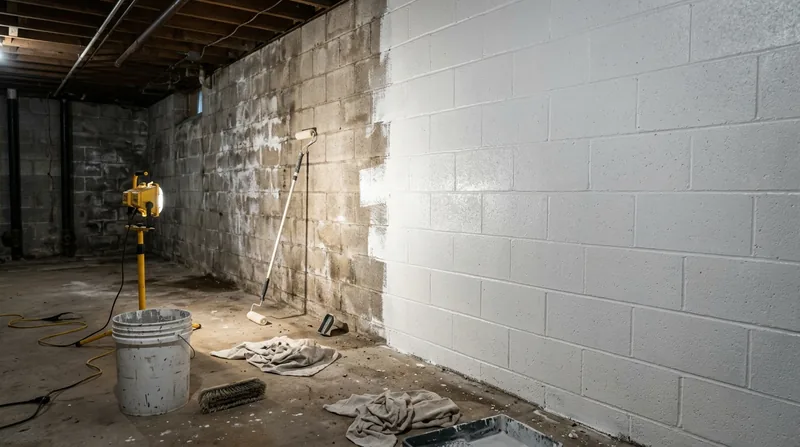




Rochester sits on glacial till over fractured Galena limestone, and that geology shows up in basements across the city. In Lowertown and the older east-side streets, 1900s brick and frame houses still have stone or early block walls that wick dampness and push white efflorescence through the mortar. Out in Elton Hills, Pill Hill and Bamber Valley, 1950s to 1970s ranches and split-levels have partly finished basements where a damp wall ruins a weekend. Northwest Rochester and the southeast edge have poured concrete walls in newer subdivisions, but the clay-rich till still holds snowmelt against the foundation. Basement Wall Sealing in Rochester starts with an honest diagnosis: sealer fixes minor dampness, not hydrostatic pressure. We tell you which problem you actually have before we open a bucket. Start with a free basement inspection if you are not sure which side of that line you are on.
Why Damp Walls Keep Coming Back in Rochester's Older Basements
The dominant failure here is not a single crack. It is damp masonry and freeze-thaw damage. Stone and early block walls in Lowertown and the east-side streets absorb groundwater, then winter temperatures freeze that moisture inside the wall and open the joints wider each spring. The clay-rich till holds water after snowmelt, and the water table rises against footings that were never designed for it. A sealer alone will not stop that pressure, and we say so.
- Efflorescence and white salt bloom on block or stone walls point to moisture moving through the masonry, not just a surface stain.
- Musty basement smell in a finished Elton Hills basement usually means damp walls behind drywall or paneling.
- Wall seepage after heavy summer storms along Cascade Creek and the Zumbro River signals hydrostatic pressure, not a sealer problem.
- Hairline cracks in poured walls in Northwest Rochester subdivisions often need epoxy or polyurethane injection before any sealer goes on.
We classify the wall first, then recommend the sealer or the drainage fix that actually matches it.
Key info: A homeowner on an older east-side street near Lowertown had white bloom on three block walls and assumed a sealer would fix it. The actual cause was a failed footing drain and rising spring water table. Sealing would have trapped moisture and made the bloom worse.
Minnesota rules on foundation and drainage work vary by jurisdiction. Check the Minnesota Department of Labor and Industry and confirm locally with the City of Rochester building department before any structural or drainage alteration.
How We Prep and Seal a Basement Wall in Rochester
Preparation is most of the job. We wire-brush and scrape loose mortar, remove efflorescence with a mild acid wash, and let the wall dry to a stable moisture reading before any product goes on. On stone walls we repoint soft joints with a compatible mortar first. Then we choose between a penetrating sealer for damp masonry and a membrane for walls that see active seepage but no pressure. If the wall is bowing or the pressure is real, we stop and talk about interior drain tile instead of selling you a coating that will fail.
- We inspect the wall, the footing area and the exterior grade, and we test moisture at several heights.
- We remove efflorescence, loose parging and failed prior coatings down to sound masonry.
- We repoint open joints on stone and early block walls with compatible mortar.
- We inject active cracks with epoxy or polyurethane before sealing, so the sealer is not bridging a moving joint.
- We apply the penetrating or membrane sealer in the correct number of coats for the wall type.
- We correct grading and downspout extensions so the wall is not re-wetted from the surface.
Every job ends with a written note on what was sealed, what was left alone, and what to watch next spring.
Key info: A split-level in Bamber Valley had damp block on the uphill side and dry walls elsewhere. We sealed the damp run, extended two downspouts past the slope, and left the dry walls untouched. The homeowner in Stewartville with the same symptoms but standing water at the cove got a drain tile recommendation instead.
Sealing Methods We Use and When Each One Fits
Not every damp wall needs the same product. The table below shows the approaches we actually use on Rochester basements and the conditions each one is built for. We pick based on wall material, moisture reading and whether pressure is present.
| Approach | Description | Best for |
|---|---|---|
| Penetrating sealer | Sinks into masonry pores and blocks capillary moisture without a surface film. | Damp stone and early block walls with no active seepage. |
| Membrane sealer | Flexible coating that bridges hairline cracks and resists minor movement. | Poured concrete walls with surface dampness and hairline checking. |
| Epoxy injection plus sealer | Structural crack fill first, then sealer over sound concrete. | Non-moving poured wall cracks that have leaked. |
| Polyurethane injection plus sealer | Flexible foam fill for cracks that move with freeze-thaw, then sealer. | Active cracks in block and poured walls that reopen each winter. |
| Drainage correction instead of sealer | We tell you when sealing is the wrong answer and pressure needs a drain. | Walls with hydrostatic pressure, cove seepage or a failed footing drain. |
If the wall is moving or bowing, sealing is not the fix and we will say so on the spot.
Basement Wall Sealing Cost in Rochester: What to Expect
Most basement wall sealing jobs in Rochester start from $1,500. That figure covers a typical damp wall run on a block or poured wall with prep, efflorescence removal and sealer. A full basement perimeter, heavy repointing on a stone wall, or crack injection ahead of sealing pushes the number up. Access matters too: a finished basement with paneling in the way takes longer than bare block in an Oronoco ranch.
We do not price from the driveway. Moisture readings, wall length and how much failed coating has to come off all change the scope. Get two or three estimates and compare what each one includes, especially whether prep and efflorescence removal are line items or buried in the total. Our full pricing overview shows how the numbers break down.
Hiring a Basement Wall Sealing Contractor Near Rochester
Ask for the license and insurance certificate before anyone touches the wall, and confirm the policy covers below-grade work. Ask what the contractor will do if the wall turns out to have pressure behind it, because the honest answer is a drain recommendation, not a second coat of sealer. Check references from older Rochester neighborhoods where stone and block walls are common.
Permits are commonly required for structural foundation repair and for work that alters drainage or the sanitary connection of a sump discharge, and thresholds vary by jurisdiction. Confirm with the City of Rochester building department. If your home is in a historic district or an HOA, check those rules before scheduling. Reach us through the contact page and we will walk the wall with you.
Basement Wall Sealing in Rochester: Pricing Guide
| Service | Price | Details |
|---|---|---|
| Single damp wall run | Starting at $1,500 | Prep, efflorescence removal and penetrating sealer on one typical block or poured wall. |
| Full basement perimeter | Starting at $3,200 | All four walls sealed, with repointing and downspout correction included where needed. |
| Stone wall repointing and seal | Starting at $2,800 | Soft mortar repointing on early stone walls before any sealer is applied. |
| Crack injection before sealing | Starting at $450 per crack | Epoxy or polyurethane injection on active cracks, priced per crack and depth. |
| Complex or large-scale job | On estimate | Finished basements, heavy failed coating removal or pressure issues need an on-site look. |
| Estimate | Free | Response within 24h at (507) 516-5528, no obligation to book. |
Indicative pricing, the exact cost depends on square footage, finish, and site access. Free personalized estimate within 24h at (507) 516-5528.


