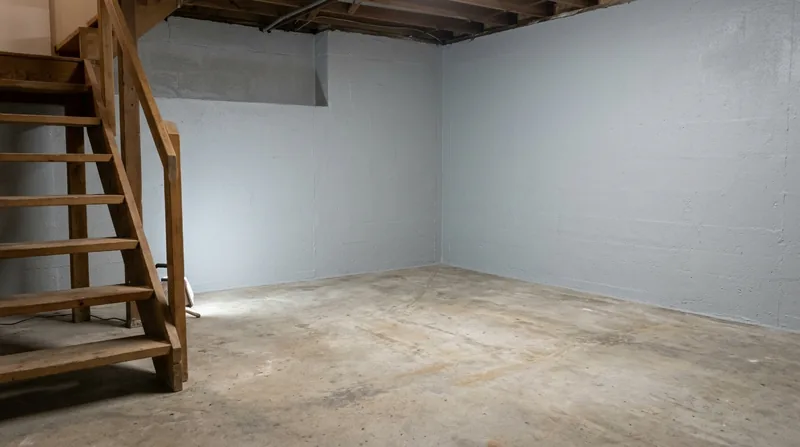




Rochester sits on glacial till over fractured Galena limestone, and that geology drives almost every wet basement call we get. In Lowertown and the older east-side streets, stone and early block walls from the 1900s to 1940s wick water after every snowmelt. In Elton Hills, Pill Hill and Bamber Valley, 1950s to 1970s ranches and split-levels show efflorescence and wall seepage where freeze-thaw has opened the block. And in the newer subdivisions on the northwest and southeast edges, poured concrete full basements still take on water when the spring water table rises and the clay-rich till holds it. A Free Basement Inspection in Rochester gives you a straight read on which of those problems you actually have before you spend a dollar on repair. We walk the walls, the floor, the cracks, the sump system, the grading and the gutters, take photos, and tell you what needs fixing now, what can wait, and when nothing is wrong. Start with our basement waterproofing service page for the full picture of how we approach below-grade moisture.
Why a Free Basement Inspection Matters on Rochester's Glacial Clay and Karst Bedrock
Most homeowners call us after the second or third wet spring, not the first. The reason is that water in a Rochester basement rarely comes from one obvious hole. It comes from hydrostatic pressure pushing through a cold joint, from a footing drain that silted shut decades ago, from a downspout dumping against the foundation, or from a crack that opens a little wider every freeze-thaw cycle. An inspection separates those causes before anyone quotes a repair.
- We check the walls for efflorescence, which is the white salt bloom that tells you water is moving through the masonry and evaporating.
- We map every crack and note whether it is a shrinkage crack, a settling crack, or an active leak that needs epoxy or polyurethane injection.
- We test the sump pump, the check valve and the discharge line, because a failed pump is the single most common cause of a finished basement flooding.
- We look at grading and downspout extensions, since a low yard that pools water against the house will defeat any interior system.
- We check window wells and the floor perimeter for seepage that points to a failed drain tile or a saturated water table.
You leave the inspection knowing which of those is your problem, not a generic list of everything a contractor could sell you.
Key info: A homeowner in Elton Hills called us after every heavy summer storm left a half inch of water along the base of a block wall. The inspection found a failed footing drain and a downspout discharging two feet from the foundation. The fix was a downspout extension and a drain tile repair, not a full exterior excavation. That is the kind of call an inspection is meant to make.
Minnesota regulates contractors through the Department of Labor and Industry, and local permits for structural foundation repair or drainage changes are handled by the City of Rochester building department. We tell you at the inspection which items on your list are likely to need a permit and which are straightforward.
How Our Rochester Basement Inspection Works, Step by Step
We do the inspection the way we would want it done on our own house: start at the outside, work in, and write down what we find. The whole visit usually runs 45 to 90 minutes depending on how much of the basement is finished and how many cracks we need to trace. You get photos of anything we flag, so you can see the efflorescence or the crack yourself instead of taking our word for it.
- We walk the exterior perimeter first, checking grading, downspout discharge, window wells and any sign of soil settlement against the foundation.
- We inspect the interior walls and floor, marking cracks, cold joints, tie holes and areas of damp masonry or efflorescence.
- We open and test the sump basin, run the pump, check the check valve and confirm the discharge line actually carries water away from the house.
- We check any visible drain tile or interior perimeter drain for silt, roots or standing water in the basin.
- We photograph everything, then sit down with you and explain what needs fixing now, what can wait a season, and what the likely cause is.
If the honest answer is that your basement is dry and the crack you are worried about is cosmetic, we say so and you owe nothing.
Key info: In a 1990s walkout in Northwest Rochester, the visible symptom was a damp patch on the lower wall after snowmelt. The inspection traced it to a window well that had filled with leaves and frozen, forcing meltwater against the wall. We cleared and regraded the well and recommended a window well drainage repair rather than a full interior drain tile system. That is the value of looking before quoting.
Inspection Findings and What They Usually Point To
Every inspection ends with a short list of conditions, and each condition maps to a different repair. The table below shows how we translate what we see in a Rochester basement into the approach that actually fits it. We use the same logic whether the house is a 1920s stone-wall home in Lowertown or a 2015 poured-wall build near Cascade Creek.
| Approach | Description | Best for |
|---|---|---|
| Crack injection | Epoxy or polyurethane injection through ports to seal an active crack from the inside. | Isolated vertical cracks in poured or block walls with no widespread seepage. |
| Interior drain tile | Perimeter drain cut into the floor slab and routed to a sump basin. | Hydrostatic pressure pushing water across the whole floor and wall base. |
| Exterior waterproofing | Membrane and dimple board applied to the outside of the wall with footing drain. | Bowing walls or failed exterior drainage where excavation is already needed. |
| Sump and discharge repair | Pump replacement, check valve, battery backup and discharge line corrections. | A working drain tile system whose pump has failed or whose discharge loops back. |
| Grading and downspout correction | Regrade the soil slope and extend downspouts away from the foundation. | Localized seepage after rain where the water source is surface runoff. |
The inspection tells you which row you are in, and we do not recommend the most expensive one unless the evidence supports it.
Free Basement Inspection Cost in Rochester: What to Expect
The inspection itself is free, and that is not a bait step before a hard sell. What homeowners actually want to know is what the repair behind it costs, so here is the honest context. A single crack injection is the low end of the range. An interior perimeter drain tile system with a new sump basin and pump sits in the middle. Exterior excavation with membrane and footing drain is the high end, and it is only justified when the wall is bowing or the exterior drainage has genuinely failed.
- Access matters: a finished basement with framed walls hides the foundation and can add time to the inspection.
- Wall type matters: stone and early block walls in older Rochester homes often need more prep than poured concrete.
- Number of cracks and whether they are active changes the repair scope, not the inspection price.
- Sump and discharge condition can turn a small repair into a pump replacement or a drain tile repair.
- Getting two or three estimates is smart, and any contractor who will not put the diagnosis in writing is telling you something.
Our full pricing overview lays out the ranges for each repair so you can compare estimates on the same basis.
Free Basement Inspection Near Me: How to Choose a Waterproofing Contractor Near Rochester
This is a small market and the same few problems come up in every neighborhood, so a contractor who works Rochester regularly will recognize your wall type and your drainage pattern on sight. Ask three questions before you book anyone: are you licensed and insured, will you put the diagnosis and the scope in writing, and do you handle the permit if the work needs one. A waterproofing specialist should also be able to tell you when a repair is not needed, which a general foundation or plumbing outfit often will not.
- Confirm licensed and insured status and ask for a certificate of insurance before work starts.
- Get two or three written estimates and compare the diagnosis, not just the number.
- Ask for local references from Rochester, Byron or Stewartville homeowners with a similar wall type.
- Ask who pulls the permit for structural foundation repair or any change to drainage or sump discharge, since thresholds vary by jurisdiction.
- Check whether your neighborhood or HOA has any restrictions before exterior excavation or grading changes begin.
If you want to talk through what you are seeing before you book, our contact page gets you a callback and a scheduled inspection at no cost.
Call (507) 516-5528 to schedule your free basement inspection in Rochester.
Free Basement Inspection in Rochester: Pricing Guide
| Service | Price | Details |
|---|---|---|
| Free basement inspection | Free | Full wall, floor, crack, sump, grading and gutter check with photos and written findings |
| Follow-up inspection after repair | Free | Re-check of completed work and any new seepage reported within the first season |
| Finished basement inspection | Free | Adds time when framed walls or ceilings hide the foundation and sump access |
| Multi-unit or large footprint | Free | Larger perimeter and multiple sump basins extend the visit but not the price |
| Travel | Included | In Rochester and surrounding communities, no separate call-out or mileage fee |
| Estimate | Free | Written scope and pricing after the inspection, response within 24h at (507) 516-5528 |
Indicative pricing, the exact cost depends on square footage, finish, and site access. Free personalized estimate within 24h at (507) 516-5528.


