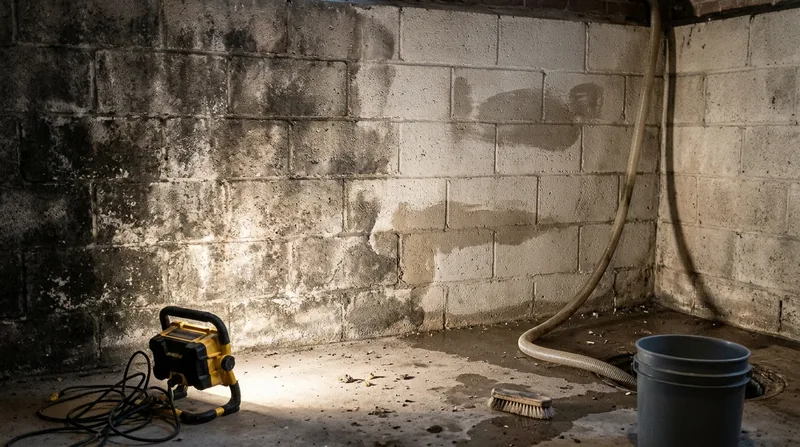




Basement Mold Remediation in Rochester
When you need Basement Mold Remediation in Rochester, the musty smell in your Lowertown or Elton Hills basement is usually a symptom, not the problem. Rochester sits on glacial till over fractured Galena limestone, so snowmelt and heavy summer storms push groundwater through joints, springs and sinkholes until it finds your stone or block foundation. Older east-side houses and 1950s ranches in Pill Hill and Bamber Valley were built with full basements that weep under hydrostatic pressure, and that persistent moisture feeds mold on joists, drywall and stored goods. We remove the mold growth and fix the moisture source, so the musty smell does not come back after the next Zumbro River rise. Call (507) 516-5528 for a free basement inspection and a straight answer on what is actually wet. Start with our basement waterproofing service to see how the moisture fix fits together.
Why Basement Mold Remediation Matters in Rochester's Older and Newer Basements
Rochester basements fail in two different ways depending on the decade they were built. Pre-1950 brick and frame houses around Lowertown and the older east-side streets have stone or early block walls that wick groundwater and show efflorescence, while 1990s to 2020s poured concrete basements in Northwest Rochester and the southeast edge crack at the cove joint and collect water after a hard rain. Both situations keep relative humidity high enough for mold growth on framing, cardboard and drywall paper. The fix is moisture control first, remediation second, because mold returns anywhere the damp stays.
- Stone and block walls in older homes pull water through mortar joints and stay damp through the long freeze-thaw cycle.
- Poured walls in newer subdivisions seep at hairline cracks and cold joints after heavy summer storms.
- Failed drain tile or a dead sump pump leaves a sump basin full and the slab wicking moisture upward.
- Finished basements trap damp behind paneling and carpet, so the musty smell shows up before visible growth does.
- Improper grading and short downspouts dump roof runoff against the foundation instead of away from it.
We read each basement against its build era and drainage before we treat anything, because the moisture source decides the method.
Key info: A 1920s house off East Center Street had white efflorescence and a musty smell in the finished room. The mold was on the back of the paneling, but the water was coming from a cracked stone wall and a sump basin that ran dry during spring thaw. We fixed the drainage first, then remediated the affected materials.
Minnesota homeowners can verify contractor licensing and local permit requirements through the Minnesota Department of Labor and Industry before any work begins.
How We Handle Basement Mold Remediation in Rochester, Step by Step
We do not spray bleach on visible spots and call it done. Every job starts with finding the moisture source, because remediation without moisture control is a temporary cleanup. We check the wall base, sump basin, window wells and floor slab for seepage, then measure humidity in the finished and unfinished zones. Only after the source is identified do we set containment and begin treatment.
- We inspect the basement and foundation, including wall seepage, efflorescence and sump performance, and document moisture readings.
- We identify the water path, whether that is hydrostatic pressure through the wall, a failed footing drain or a grading problem pushing runoff against the foundation.
- We set up containment with plastic sheeting and negative air pressure so spores do not spread into the living space above.
- We remove and bag porous materials that cannot be cleaned, such as soaked drywall, insulation and cardboard.
- We treat affected framing, joists and masonry with an antimicrobial application and HEPA-vacuum the surfaces.
- We correct the moisture source with drainage, sealing or a dehumidification plan, then verify dry readings before we close out.
That sequence is why our remediation holds up through the next spring thaw instead of failing by July.
Key info: In a split-level in Bamber Valley, the musty smell traced to a window well that filled with snowmelt and drained straight against the wall. We corrected the window well drainage, remediated the damp framing below the sill, and the room stayed dry through the next melt.
Remediation and Moisture-Control Methods We Use
The right method depends on how far the moisture has spread and what is feeding it. Surface growth on masonry calls for a different approach than mold behind finished drywall or in saturated framing. We match the method to the material and the water source, and we tell you plainly when a simple crack seal is enough and when hydrostatic pressure means drainage work.
| Approach | Description | Best for |
|---|---|---|
| Containment and HEPA remediation | Sealed work area, negative air pressure and HEPA vacuuming of all affected surfaces. | Finished basements with visible growth on framing or drywall. |
| Antimicrobial treatment of masonry | Cleaning and treating stone, block and poured walls where growth sits on the surface. | Older Lowertown and east-side basements with efflorescence and surface mold. |
| Material removal and replacement | Bagging and disposing of soaked drywall, insulation and porous goods that cannot be cleaned. | Basements that flooded after a sump pump failure or a backed-up drain tile. |
| Drainage correction | Interior perimeter drain, sump replacement or grading fixes that stop the water at the source. | Walls that seep every spring under hydrostatic pressure. |
| Humidity control and vapor barrier | Dehumidification and a sealed vapor barrier to keep the basement dry between storms. | Basements that stay damp without standing water. |
Each of these methods only works when it is matched to the actual water source, which is what the inspection determines.
Basement Mold Remediation Cost in Rochester: What to Expect
Most basement mold remediation in Rochester starts from $1,500 for a contained treatment of a limited area with a clear moisture source. The final number depends on square footage affected, how much porous material has to come out, and whether drainage work is needed to stop the water. A small surface cleanup on a block wall is a very different job from a finished basement that took on water after a sump pump failure. We give you the scope and the price before we start, and we tell you when a simple crack seal is enough instead of a full drainage system.
Getting two or three estimates is smart on any remediation job, because the scope should match the moisture source and not just the visible growth. Ask each contractor how they plan to stop the water, not only how they will clean the mold. Our full pricing overview lays out how the numbers break down by scope and access.
Basement Mold Remediation Near Me: How to Choose a Contractor Near Rochester
Hiring for mold remediation near Rochester means hiring for the moisture fix, not just the cleanup. Ask whether the contractor is licensed and insured, request the certificate, and check references from jobs in similar housing stock, whether that is a 1920s stone-wall basement or a 2005 poured-wall walkout. Confirm who pulls any permit required for drainage or structural work, since rules vary by jurisdiction and the local building department has the final say. If your home is in an HOA, check its rules on exterior discharge lines and sump routing before work starts.
Reach out through our contact page to schedule a free inspection and get a written scope before you commit to anything.
Basement Mold Remediation in Rochester: Pricing Guide
| Service | Price | Details |
|---|---|---|
| Contained surface remediation | Starting at $1,500 | Covers containment, HEPA vacuuming and antimicrobial treatment for a limited area with an identified moisture source. |
| Finished basement remediation | Starting at $2,800 | Includes removal of affected drywall and insulation, containment and treatment; scope grows with square footage and material. |
| Remediation with drainage correction | On estimate | Needs an on-site look because the drainage scope (interior drain tile, sump or grading) drives the total. |
| Travel | Included | in Rochester and surrounding areas, no separate call-out or mileage fee |
| Estimate | Free | Response within 24h at (507) 516-5528, no obligation to book |
Indicative pricing, the exact cost depends on square footage, finish, and site access. Free personalized estimate within 24h at (507) 516-5528.


